
By Sandra M. McCroom, Children’s Services of Roxbury President & CEO
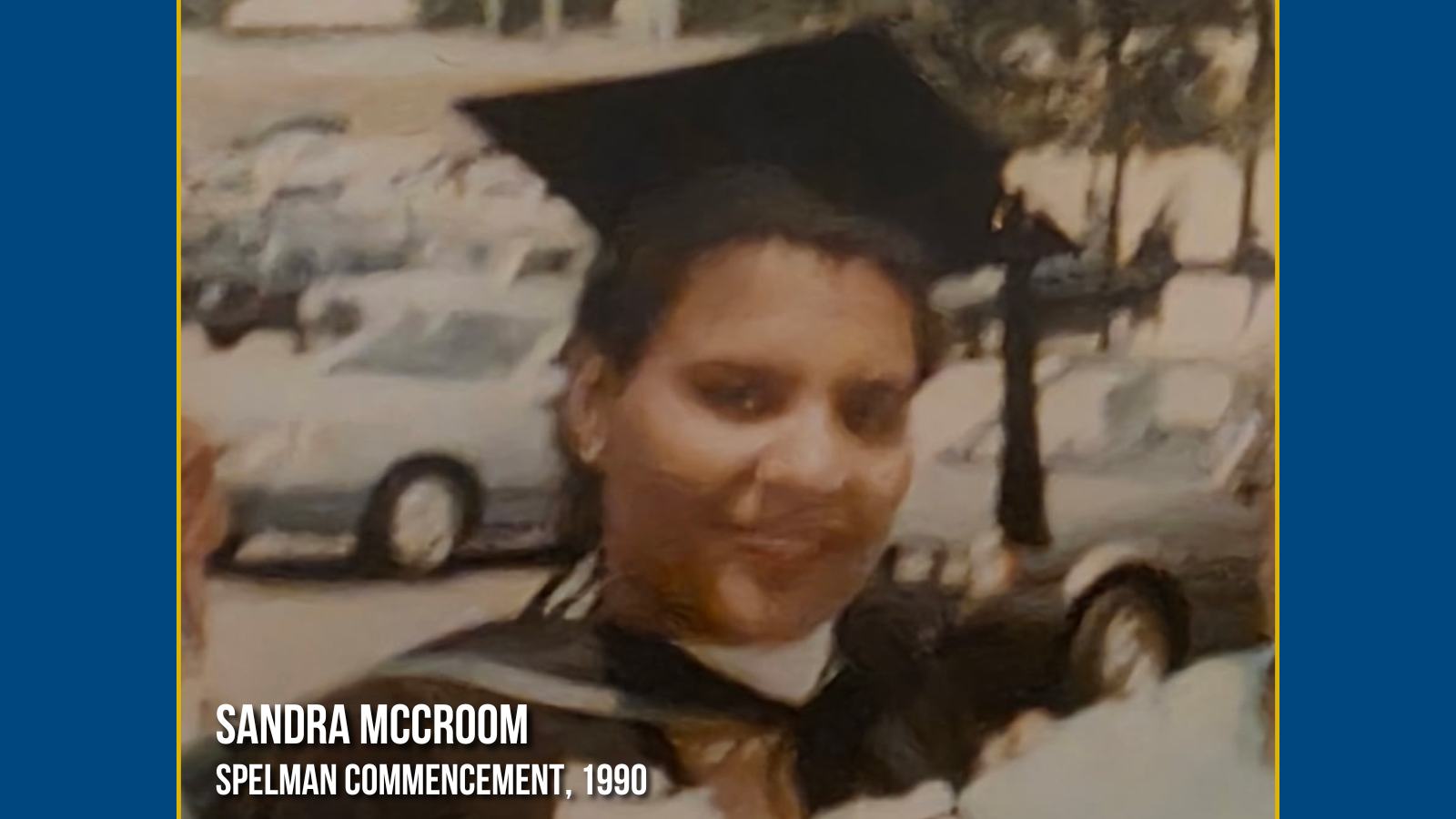
Thirty-five years ago, I wrote a commencement speech about tearing down the walls of oppression and paving roads of possibility.
I deeply believed in the power of the people to transform obstacles into opportunities then, and I still do.
But I never imagined, decades later, how many of those walls would remain.
Nor did I realize how much that graduation speech at Spelman College, a renowned HBCU for women of color, would shape the leader I would become.
Today, as Black Women’s History Month comes to a close and graduation season approaches, I find myself reflecting on that moment and on the dynamic women at Spelman who profoundly shaped my understanding of leadership, justice, and possibility — and the actions those experiences inspired for breaking down the barriers our communities continue to face.
Lessons from Spelman
From my fellow students, professors, and mentors to the honorable Board of Trustees and our inspirational President, Dr. Johnnetta B. Cole — “The Sista’ President” and the first Black woman to lead Spelman College — these women brimmed with intelligence and initiative, capability and creativity, proficiency and promise.
What a beautiful gift it was to see myself reflected in so many women with authority and power. That experience had enormous and enduring impact on me. It helped me envision possibilities for my future that may have been unimaginable otherwise.
That immersion in a culture of excellence, scholarship, and rigorous exchange of ideas became a fortifying force in my leadership. It propelled me into nearly three decades steering social impact nonprofits and state government agencies, including Children’s Services of Roxbury (CSR), where I am celebrating 10 years as President and CEO.
Then and now: Walls and battles
At this point in my journey, I am alarmed by how many messages in that 1990 graduation speech still apply today.
As I stood before my Spelman sisters — whom I called “the first class of the last decade of the 20th century” — I spoke of our memories, achievements, and excitement but also the stark challenges that lay ahead. Across Eastern Europe, people battled for freedom and human rights, and throughout the world, the shadow of apartheid’s legal segregation loomed large.
Here in America, insurmountable walls of oppression stood in the way of opportunity, undermining stability for millions of young people, particularly young women and youth from disadvantaged backgrounds.
Wages stagnated while the cost of living climbed. Families worked harder, but couldn’t get ahead. Housing became increasingly out of reach. And unequal school funding sabotaged the potential — and future earning power and economic mobility — of countless young people.
Looking at the world today, I feel a deep sense of déjà vu.
Across the globe, we are witnessing rising conflict, deepening division, and renewed threats to human rights. Here at home, too many families experience heightened pressures every day as new versions of old systemic barriers pile on — from immigration policies and funding cuts to discriminatory violence and indifference toward survivors of abuse.
So, how can we help our sisters and brothers whose hope and self-confidence continue to be crushed by entrenched systemic barriers? How do we plant the seeds that will grow the unshakable belief and resilient optimism necessary to shift their trajectory?
Activating change and building opportunity
I may not have all of the answers, but I know this: We need the kind of transformative change that requires more than good intentions.
I’m talking about the kind of transformative change that demands institutions and leaders who steadily invest in people and opportunity in their communities. That means:
- Expanding access to education, housing, workforce development, and childcare.
- Designing culturally responsive services that recognize strengths rather than deficits.
- Increasing the number of trusted behavioral health providers who value cultural resistance and share the lived experience of those in their care.
At CSR, we are committed to achieving all of the above. We intentionally employ more than 350 community members who bring lived experience and insight that help strengthen and elevate the programs and services we provide — ensuring they reflect the communities we serve and meet people where they are.
From reflection to action
One example is our Front Porch program, which connects parents with Family Partners — trusted peers who share language, culture, and lived experience. These partners are trained to support families through a wraparound, culturally responsive, and strengths-based approach to mental health care. By providing practical tools, resources, and guidance tailored to each family’s needs, they help build trust, strengthen self-empowerment, and advance equity.
When we piloted the program:
- 73% of parents reported a decrease in depression symptoms.
- 71% achieved goals related to education, housing, childcare, and the like.
- 68% improved skills like effective communication and community resource navigation.
We are proud of that progress, but we know the work is far from finished and we know we are not alone in striving to get there. As I said in my Spelman speech all those years ago, “Our biggest final exam still awaits us, and the world is in desperate need of a passing grade.”
That truth still holds today. We must continue the work of dismantling the walls of oppression designed to isolate, stagnate, and subjugate.
And just like my Spelman sisters in that first class of the last decade of the 20th century, all of us who work for organizations of change — and all who align with such organizations — represent a powerful force. A force capable of tearing down the walls of despair and building hope; of dismantling the walls of hate and laying new foundations rooted in love.
We are the way forward.
And if we remain steadfast in our purpose and united in our efforts, we can help ensure that the next generation inherits not the walls we faced, but the doors we helped open.